
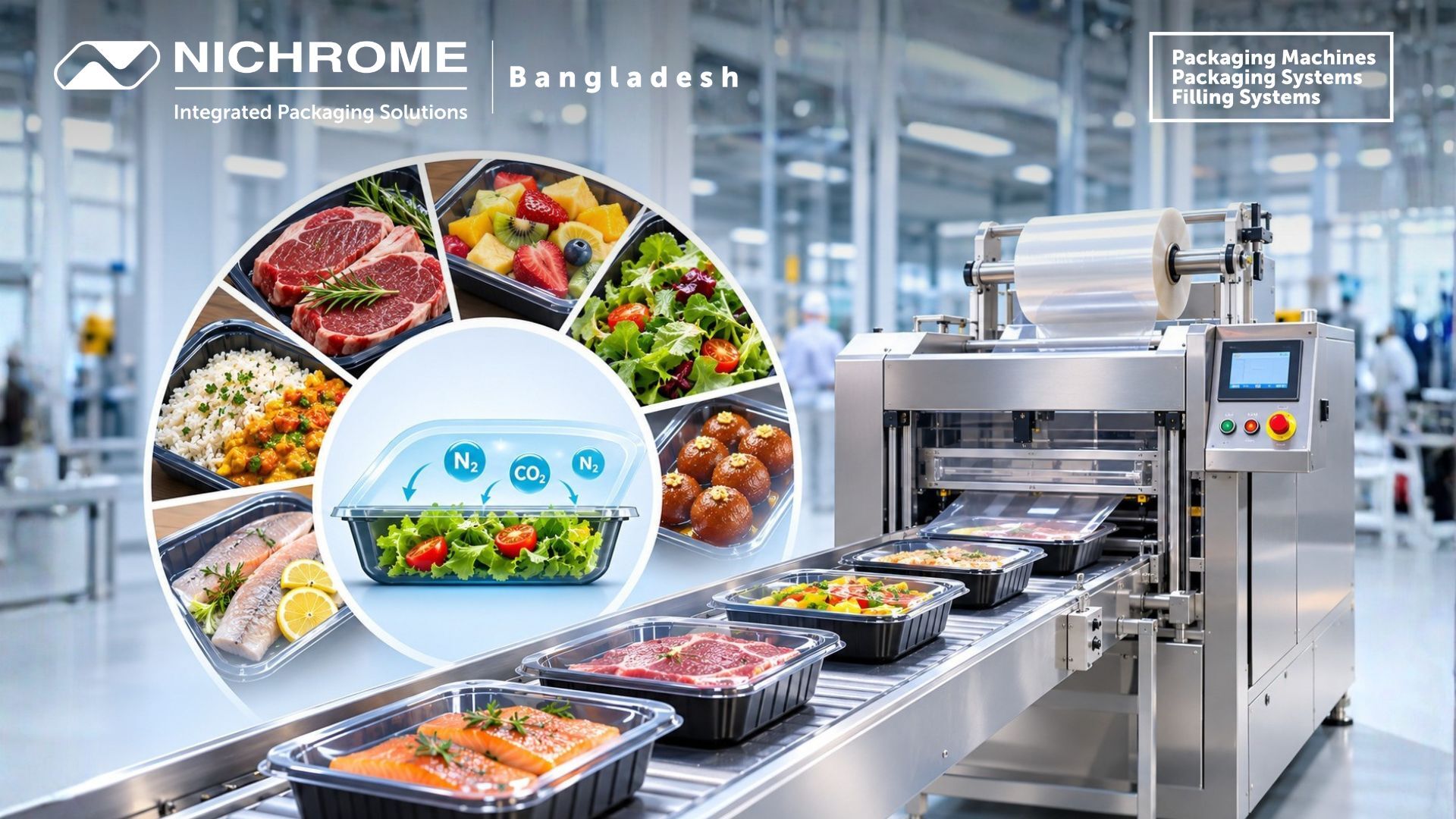
How MAP Tray Sealing Machine Helps Preserve Food Freshness and Extend Shelf Life
Introduction: The Importance of Food Freshness and Protection
Food freshness plays a critical role in product quality, consumer satisfaction and food distribution. From fresh fruits and vegetables to meat, fish, sweets and ready-to-eat meals, food manufacturers need packaging that helps protect products during storage, handling and transportation.
As the food industry evolves, manufacturers are looking beyond conventional packaging methods towards technologies that can help maintain product quality and manage shelf life. Packaging must not only protect food from external contamination but also suit the product’s specific storage and distribution requirements.
This is where a MAP tray sealing machine becomes relevant. Modified Atmosphere Packaging (MAP) combines suitable packaging materials with a controlled gas atmosphere to help preserve the quality of selected food products. By replacing or modifying the air inside a sealed package, MAP can help slow certain deterioration processes when the packaging system, gas mixture, product and storage conditions are appropriately selected.
For food manufacturers, the right food packaging machine can support consistent sealing, efficient production and suitable product protection. MAP tray sealing technology offers a practical option for applications where product presentation, packaging integrity and freshness management are important.
What Is MAP Tray Sealing? Understanding Modified Atmosphere Packaging
Modified Atmosphere Packaging is a food packaging technique in which the atmosphere inside a package is altered from the composition of normal air. Depending on the product, this may involve reducing oxygen, increasing carbon dioxide or using nitrogen to achieve the required packaging conditions.
A MAP tray sealing machine places food in a suitable tray and seals it with compatible lidding film. Where the machine and application support it, air inside the tray is replaced or modified with a selected gas mixture before sealing.
The objective is to create a packaging environment suited to the product’s preservation requirements. Different foods respond differently to oxygen, carbon dioxide, moisture and temperature, so the gas composition must be selected according to the application.
For example, fresh-cut produce, meat, fish, sweets and prepared meals may require different packaging conditions. MAP does not eliminate the need for hygienic processing, appropriate refrigeration or established food-safety procedures.
How Does MAP Tray Sealing Work?
The process generally involves the following steps:
- Product preparation: Food is prepared and portioned according to the required pack format.
- Tray loading: The product is placed in a suitable food-grade tray.
- Atmosphere modification: Where MAP is used, the atmosphere inside the tray is adjusted using the specified gas mixture.
- Tray sealing: A compatible lidding film is sealed to the tray to create a secure package.
- Quality inspection: Seals and finished packs are checked according to the manufacturer’s quality-control procedures.
The exact process depends on the machine configuration, product characteristics, packaging materials and required output.
Key Benefits of MAP Tray Sealing Technology
1. Helps Preserve Food Quality
Exposure to oxygen can contribute to oxidation, colour changes and quality deterioration in certain foods. A properly designed MAP system can help slow selected deterioration processes by creating a more suitable atmosphere inside the package.
This can be particularly useful for products that require careful freshness management during storage and distribution.
2. Supports Shelf-Life Management
Shelf life depends on several factors, including the product’s composition, initial microbial quality, processing conditions, packaging materials and storage temperature.
MAP can help extend the shelf life of suitable products when the gas mixture, packaging integrity and cold-chain requirements are appropriately controlled. The actual result must be established through product-specific shelf-life testing rather than assumed from the packaging method alone.
3. Supports Hygienic Packaging
A sealed tray helps protect food from direct external exposure during handling, storage and distribution. Automated tray sealing can also support a more consistent packaging process when appropriate hygiene controls and operating procedures are followed.
Packaging alone, however, does not make a product sterile or eliminate the need for food-safety controls.
4. Enhances Product Presentation
Tray packaging provides a structured format that can help display food clearly and support convenient storage and handling. Transparent trays and compatible films can allow consumers to view the product before purchase, depending on the packaging design.
This is particularly relevant for fresh produce, meat, fish, sweets and prepared meals sold through retail outlets.
5. Supports Efficient Packaging Operations
An automatic tray sealing system can help standardise tray handling and sealing operations. Depending on its configuration and integration, it can support repeatable production and reduce the need for certain manual packaging activities.
For manufacturers evaluating a food packaging machine, it is important to assess sealing performance, required output, changeover requirements, tray compatibility and available production space.
Applications of MAP Tray Sealing Across the Food Industry
MAP tray sealing can serve a range of food applications, provided the packaging format and atmosphere are appropriate for the product.
Fresh Fruits and Vegetables
Fresh-cut fruits and prepared vegetables can undergo changes in colour, texture and quality after processing. Suitable packaging and atmosphere management can help slow certain deterioration processes while supporting convenient distribution.
The selected atmosphere must account for the product’s respiration rate, preparation method and storage conditions.
Meat and Fish
Fresh meat and fish can be sensitive to oxidation, microbial activity and temperature changes. MAP may help manage selected quality changes, depending on the product and gas composition.
Strict hygiene, temperature control and validated shelf-life procedures remain essential throughout storage and distribution.
Sweets and Confectionery
Sweets and confectionery products may require protection from moisture, physical damage and environmental exposure. A suitable tray sealing solution can support product presentation and help maintain packaging integrity.
The best packaging format depends on the type of sweet, its moisture content, sensitivity and distribution requirements.
Ready-to-Eat Meals
Ready-to-eat food packaging must accommodate products that may contain multiple ingredients and require convenient storage and handling. MAP tray sealing can be considered for suitable prepared meals where the packaging atmosphere, tray design and storage conditions meet the product’s requirements.
Manufacturers should validate the process against the food’s composition, intended shelf life and applicable safety requirements.
Snacks and Namkeen
Certain snacks and namkeen products can be affected by oxygen, moisture and loss of crispness. Depending on the product and required pack format, tray sealing or other suitable packaging technologies may help address these requirements.
A traditional pouch-based snacks packaging machine may be more appropriate for some applications, while tray sealing may suit products requiring a rigid tray and lidding film.
Selecting the correct technology starts with understanding the product and the packaging outcome required.
Nichrome’s MAP Tray Sealing Machine
Selecting a MAP tray sealing machine involves more than choosing a sealing format. Manufacturers must consider tray dimensions, film compatibility, production capacity, sealing requirements and the characteristics of the food being packaged.
Nichrome’s MAP tray sealing offering includes the Athena tray sealer, designed for applications requiring tray sealing and protective-atmosphere packaging. The machine’s suitability should be assessed against the intended product, packaging configuration and required operating conditions.
For food manufacturers, the evaluation should include:
- Tray dimensions and material compatibility.
- Product type and portion size.
- Required gas-flushing or atmosphere-modification capabilities.
- Sealing quality and packaging integrity.
- Required production output.
- Changeover and cleaning requirements.
- Integration with upstream preparation and downstream handling.
- Applicable hygiene and food-safety requirements.
These considerations help manufacturers select a packaging machine that aligns with their production requirements instead of relying on a one-size-fits-all approach.
Watch Nichrome’s MAP Tray Sealing Machine in Action
https://youtu.be/PO_24HTIyKk?si=3jViadOtceEFpP9Z
Conclusion: Explore MAP Tray Sealing Solutions with Nichrome Bangladesh
Maintaining food quality throughout storage and distribution requires the right combination of processing, packaging and storage practices. Modified Atmosphere Packaging offers a valuable option for suitable food products by changing the atmosphere inside a sealed package to help manage selected deterioration processes.
From fresh produce and meat to sweets and ready-to-eat meals, MAP tray sealing can support freshness management, product presentation and consistent packaging when the system is correctly specified and validated.
For food manufacturers exploring a new food packaging machine, the priority is to identify a solution that matches the product, packaging format, production requirements and intended shelf life.
Explore Nichrome Bangladesh’s MAP tray sealing solutions and discuss your food packaging requirements with the team.
Website: https://bangladesh.nichrome.com/
Frequently Asked Questions
A MAP tray sealing machine seals food inside a tray using compatible lidding film and, where equipped for it, modifies the atmosphere inside the package with a selected gas mixture. It is used for suitable food applications where atmosphere management can help preserve product quality.
MAP changes the atmosphere inside a package to help slow certain deterioration processes, such as oxidation and the growth of some microorganisms. Its effectiveness depends on the product, gas mixture, packaging integrity, hygiene and storage temperature.
Depending on the machine configuration and packaging requirements, MAP tray sealing can be suitable for fresh-cut fruits and vegetables, meat, fish, sweets and ready-to-eat meals. Each product requires an appropriate atmosphere and validated storage conditions.
Yes, MAP can be suitable for selected ready-to-eat foods when the product, packaging materials, gas composition and storage requirements are compatible. Product-specific shelf-life validation and appropriate food-safety controls are essential.
MAP replaces or modifies the atmosphere inside a package using a selected gas mixture before sealing. Vacuum packaging removes much of the air from the package before sealing. The appropriate method depends on the food’s characteristics, appearance, preservation requirements and distribution conditions.
Consider the product type, required packaging format, production output, packaging material, shelf-life objectives, hygiene requirements and available floor space. For MAP tray sealing, also evaluate tray compatibility, gas-flushing capabilities, sealing performance and the conditions needed to maintain product quality.
Suitable tray sealing systems can package selected sweets and food products, depending on their shape, texture, moisture sensitivity and packaging format. Some snacks and namkeen products may be better suited to pouch packaging, so the machine should be selected according to the application.
Food manufacturers can explore Nichrome Bangladesh’s packaging machinery portfolio at https://bangladesh.nichrome.com/ and contact the team to discuss product suitability, tray sealing requirements and available solutions.
No. Many MAP-packed foods still require refrigeration and strict temperature control. The required storage conditions depend on the food, the packaging atmosphere and validated food-safety requirements.
No. Shelf life depends on the product, processing hygiene, packaging materials, gas composition, seal integrity and storage conditions. It must be established through appropriate product-specific testing and validation.
0 comment